On this page
- 01What Is Turnkey Construction?
- 02What Is Included in a Turnkey Project?
- 03Turnkey Construction Process: Step by Step
- 04Benefits of Turnkey Construction
- 05Limits of Turnkey Construction You Should Know
- 06Turnkey Contract vs Labour Contract: Which Is Better?
- 07Turnkey Construction Cost Per Sq Ft in Jaipur
- 08How to Choose a Turnkey Construction Company in Jaipur
- 09Conclusion
Building a house means dealing with many people. There is an architect, a civil contractor, an electrician, a plumber, a tile mason and a painter. If even one of them is late, the whole project gets stuck, and you are the one making the phone calls.
This is why many homeowners in Jaipur ask one question before they start: what is turnkey construction, and is it right for my home?
In this guide, we explain the turnkey construction meaning in simple words. You will also learn how the process works, what it includes, its benefits and limits, and what it costs per sq ft in Jaipur.
What Is Turnkey Construction?
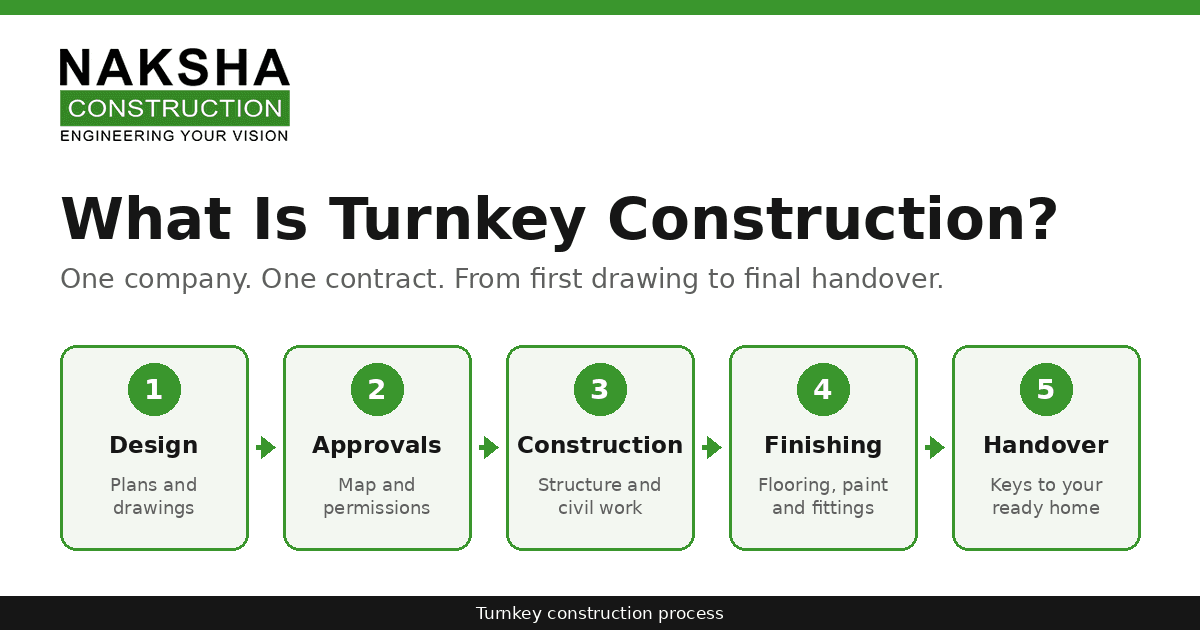
Turnkey construction is a way of building where one company takes full responsibility for your project, from the first drawing to the final handover. You sign one contract, pay one company and talk to one point of contact.
When the work is finished, you simply turn the key and walk into a ready home. That is where the name comes from.
The company arranges the design, approvals, materials, labour, site supervision and finishing. You do not have to buy cement, chase the electrician or check if the plumber came on time.
Turnkey construction meaning with a simple example
Suppose you own a 30 x 50 plot in Mansarovar and want to build a two-floor house. You have two options.
Option 1: Hire everyone yourself. You find an architect, then a civil contractor, then separate teams for electrical, plumbing, flooring and paint. You buy the material, compare rates and visit the site almost every day.
Option 2: Go turnkey. You explain your needs and budget to one company. They design the house, give you one price, build it and hand it over ready to live in.
Both options can give you a good house. The difference is who carries the daily work and the risk.
What Is Included in a Turnkey Project?
The exact scope changes from company to company, so always read the contract. A typical turnkey project for a home covers:
- Site visit, soil check and planning
- Architectural and structural drawings
- Help with JDA or JMC map approval
- All materials such as cement, steel, bricks, sand and tiles
- All labour, from masons to painters
- Civil work: foundation, columns, slabs, walls and plaster
- Electrical and plumbing work
- Flooring, doors, windows and painting
- Site supervision and quality checks
- Final cleaning and handover
Some items are often quoted separately, even in a turnkey deal:
- Boundary wall, main gate and parking
- Modular kitchen, wardrobes and false ceiling
- Furniture, appliances and landscaping
- Government fees and connection charges for water and electricity
Ask for a written list of what is included and what is not. This one page saves most arguments later.
Turnkey Construction Process: Step by Step
Most turnkey projects follow the same seven steps.
- First meeting and site visit. The company understands your family's needs, your budget and your plot.
- Design and drawings. The team prepares the floor plan, elevation and structural drawings. At Naksha Construction, this is handled by our architectural design services team, so the people who draw the plan also work with the people who build it.
- Estimate and contract. You get a detailed estimate with material brands, a payment schedule and a completion date. Once you agree, both sides sign the turnkey contract.
- Approvals. The map is submitted for approval before any work begins.
- Civil work. This is the foundation, structure, brickwork and plaster. It is the longest stage and it decides how strong your house will be, so it needs an experienced civil contractor in Jaipur.
- Finishing work. Electrical, plumbing, flooring, doors and windows come next, followed by professional painting services. If your contract covers interiors, the interior design in Jaipur work also happens at this stage.
- Final check and handover. You walk through the house with the team, note any small fixes and receive the keys once they are done.
Benefits of Turnkey Construction
One point of contact
You call one person for everything. There is no blame game between the plumber and the tile mason, because one company answers for both.
You know the cost before you start
The price is fixed in the contract for the agreed design and materials. This makes it easier to plan your savings or home loan.
It saves your time
The company orders material and lines up each team in the right order. Work does not stop because sand did not arrive or the electrician is busy on another site.
Clear responsibility for quality
If a wall cracks or a pipe leaks, you know who has to fix it. With separate contractors, each one tends to point at the other.
Less stress for busy families
Turnkey works well if you have a full-time job, live in another city or are building for the first time. You still visit and approve things, but you are not running the site.
Limits of Turnkey Construction You Should Know
Turnkey is not perfect for everyone. Keep these points in mind:
- Less day-to-day control. The company chooses the labour and the order of work. If you enjoy managing every detail, this may feel restrictive.
- Changes cost extra. If you change the design or upgrade the tiles midway, the price goes up. Finalize your plan before work starts.
- Everything depends on one company. A wrong choice affects the whole house. Take your time and read our guide on how to choose a construction company before you sign.
Turnkey Contract vs Labour Contract: Which Is Better?
In a labour contract, you buy all the material and the contractor only supplies workers. In a turnkey contract, the company supplies both.
| Point | Turnkey contract | Labour contract |
| Who buys material | The company | You |
| Who manages the site | The company | Mostly you |
| Cost clarity | Total price agreed at the start | Final cost known only at the end |
| Your time on site | A few visits a month | Almost daily |
| Material price rise | Usually the company's risk | Your risk |
| Material wastage or theft | The company's problem | Your loss |
| Best for | Busy or first-time owners | Owners with time and building experience |
A labour contract can cost less if you know material rates well and can be on site every day. For most families, a turnkey contract is the safer choice.
There is also a middle path. You can hire separate contractors and let project management consultancy services check their quality, cost and schedule for you.
Turnkey Construction Cost Per Sq Ft in Jaipur
Turnkey construction cost per sq ft depends mainly on the quality of materials and finishes you choose. These are the current market ranges in Jaipur:
| Quality level | Cost per sq ft | What you usually get |
| Basic | ₹1,400 to ₹1,700 | Standard bricks, local tiles, basic fittings |
| Standard | ₹1,800 to ₹2,200 | Branded cement and steel, vitrified tiles, modular-ready kitchen |
| Premium | ₹2,400 to ₹3,200 and above | Imported tiles, designer woodwork, false ceilings, premium sanitaryware |
For example, a 1,500 sq ft house at standard quality works out to about ₹27 lakh to ₹33 lakh (1,500 x ₹1,800 to ₹2,200).
Approval charges, water and electricity connections, tanks and a small safety buffer usually add another 12% to 18% on top. Land cost is always separate.
Your final rate also changes with:
- Plot size, shape and soil condition
- Number of floors
- Design complexity and elevation
- Brands of cement, steel, tiles and fittings
- How much interior work is part of the contract
For a stage-wise breakup of materials and labour, read our full guide on house construction cost.
How to Choose a Turnkey Construction Company in Jaipur
The success of a turnkey project depends on the company you pick. Check these points before you sign:
- See finished homes. Visit one or two completed sites and, if possible, talk to the owners.
- Ask for a detailed estimate. It should name the brand and grade of every major material, not just a rate per sq ft.
- Check the payment schedule. Payments should be linked to completed stages, not to dates.
- Read the timeline clause. The contract should state the handover date and what happens if it is missed.
- Ask who supervises the site. A qualified engineer should visit regularly.
- Get the warranty in writing. This covers seepage, cracks and other defects after handover.
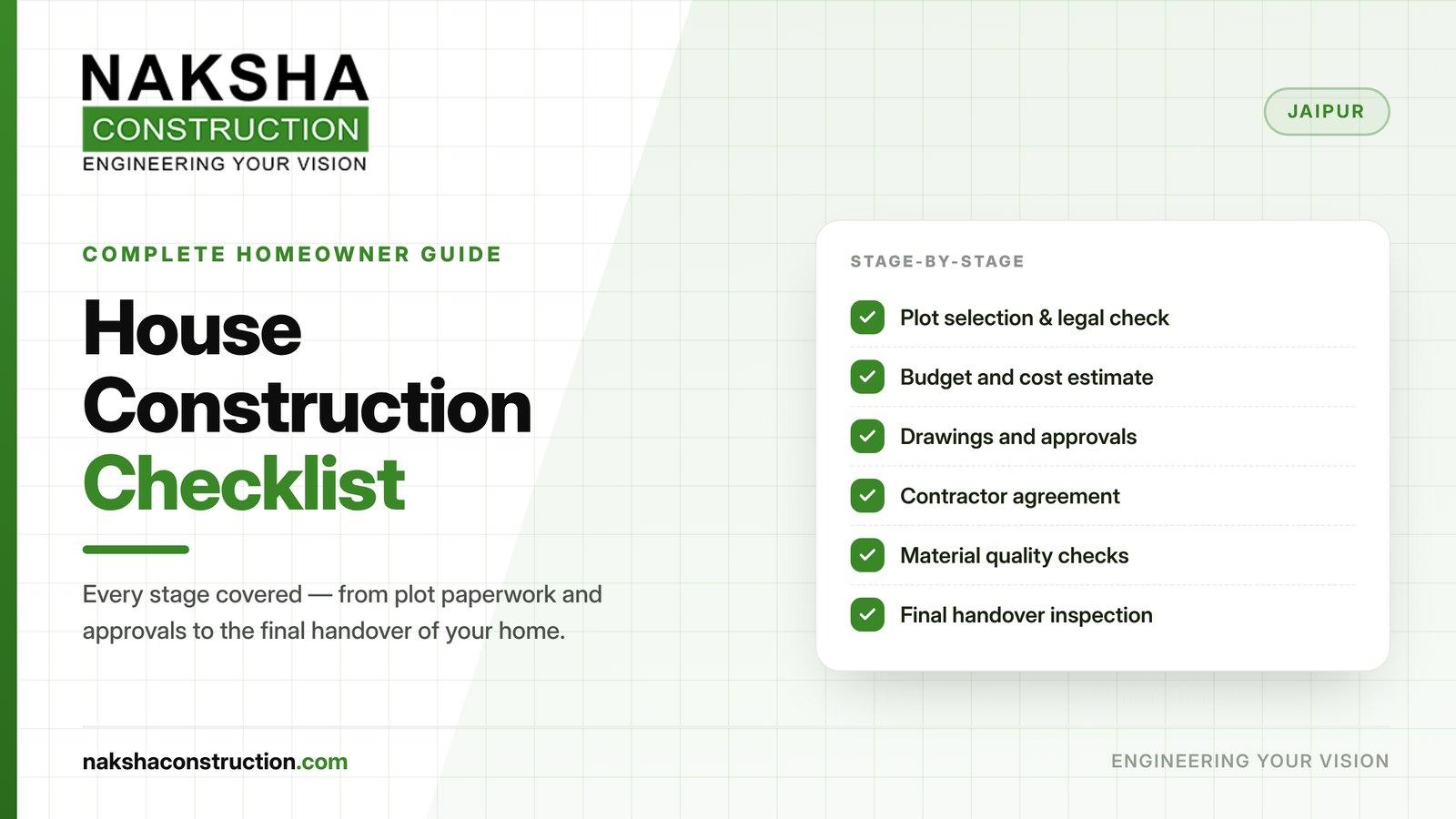
It also helps to keep a house construction checklist with you, so no stage is missed during site visits.
As a construction company in Jaipur, Naksha Construction handles design, civil work, finishing and interiors under one roof, with one team answerable to you from start to finish.
Conclusion
So, what is turnkey construction? It is the simplest way to build: one company, one contract and one price, from the first drawing to the day you get your keys. You give up some daily control, and in return you save time, avoid coordination trouble and know your budget from the start.
If you are planning to build in Jaipur and want a clear estimate for your plot, talk to the Naksha Construction team. Share your plot size and requirements, and we will explain the scope, cost and timeline in plain words.